Albany and the Capital
People are often surprised that the capital of New York is not New York. The reason is partly geography, partly revolution, and partly the fact that Albany got there first.
Fort Orange
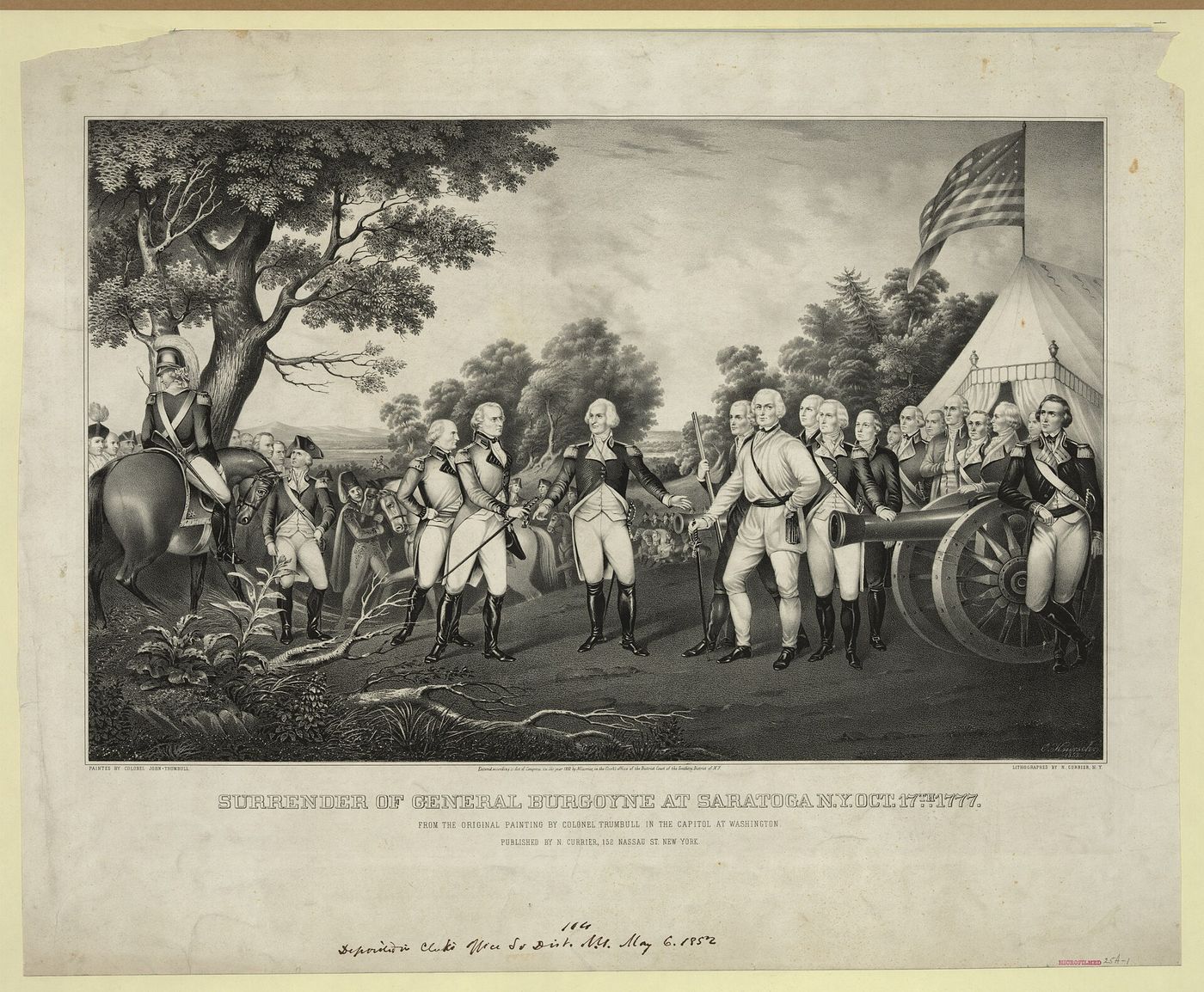
The Dutch built Fort Orange in 1624 at the head of navigation on the Hudson, where ocean-going vessels had to stop and the fur trade with the interior began. A civilian settlement, Beverwijck, grew alongside it. When the English took the colony in 1664 both the town and the province were renamed for the Duke of York and Albany, the future James II.
In 1686 Governor Thomas Dongan granted the city a charter, and Albany has operated under municipal government continuously ever since. That charter, and the one granted to New York City the same year, make them among the oldest continuously chartered cities in the United States.
The Albany Congress
Albany’s position at the edge of Iroquois country made it the natural place to negotiate. In June 1754, with war against France approaching, delegates from seven colonies met there with the Mohawk and the rest of the Six Nations. The immediate business was the alliance; the lasting result was a proposal by Benjamin Franklin for a single government over all the colonies, with a president appointed by the Crown and a grand council chosen by the assemblies.
The Albany Plan of Union was rejected by every colonial assembly and ignored in London. It is remembered because the objections raised against it in 1754 were argued again, with a different conclusion, in 1787.
Capital
Through the Revolution the New York government moved wherever it was safe: Kingston, which the British burned in 1777, then Poughkeepsie and elsewhere. The legislature settled on Albany in 1797, and it has met there since.
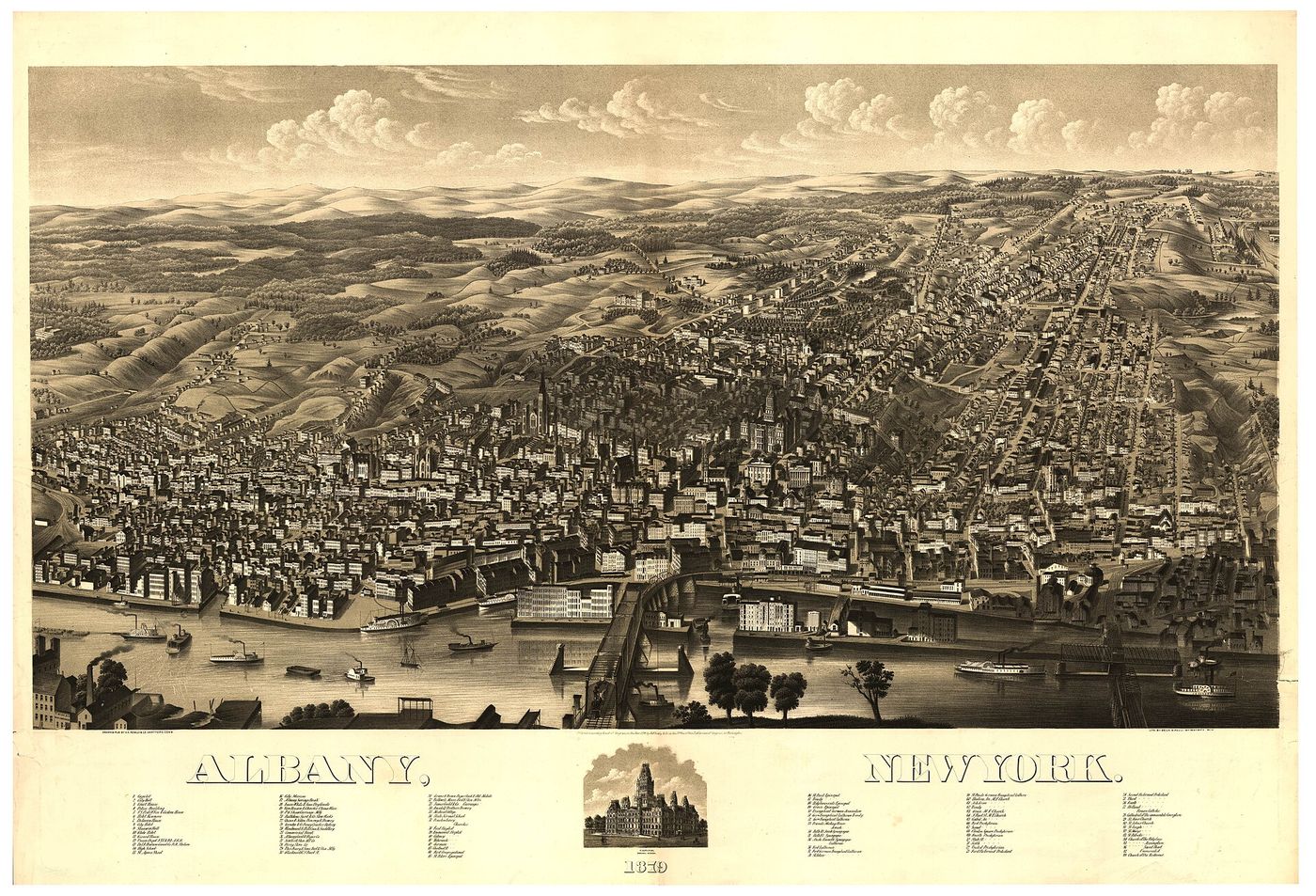
The choice looks odd only from the city. Albany sat at the junction of the Hudson and the Mohawk corridor, the two routes that mattered before railways, and it was defensible in a way the port was not. When the Erie Canal opened in 1825 its eastern terminus was at Albany, which confirmed the decision for the following century.
The Capitol built between 1867 and 1899 shows what the state thought of itself in those years. It took thirty-two years, five architects, and about twenty-five million dollars, and it was never finished as designed: the tower intended to crown it was abandoned when the foundations proved inadequate. The great staircase inside, carved with hundreds of faces, is known as the Million Dollar Staircase because that is roughly what it cost.